
The aerospace small-parts bottleneck is stalling program schedules across commercial and defense aerospace, and the numbers behind it are staggering. Aircraft manufacturers, defense primes, and their tier-one suppliers are all racing to catch up on delivery backlogs — but the pinch point often lives further down the supply chain in precision-machined parts like fasteners, shafts, pins, connectors, and small housings. Program managers who understand where the bottleneck actually sits can protect their schedules before the next audit or shortage forces the issue.
The Numbers Behind the Backlog
The scale of the current situation is well documented. According to the International Air Transport Association, supply chain challenges are expected to cost the airline industry more than $11 billion in 2025, based on a joint study with Oliver Wyman titled Reviving the Commercial Aircraft Supply Chain. The commercial aircraft backlog has surpassed 17,000 aircraft — roughly 12 years of production at current rates — per IATA reporting from December 2025.
Delivery shortfalls now total at least 5,300 aircraft. Aircraft deliveries fell from a peak of 1,813 units in 2018 to 1,254 units in 2024, a 30% shortfall against forecasts. IATA concludes that the structural mismatch between airline requirements and production capacity is unlikely to normalize before 2031 to 2034.
These are not abstract industry figures. They translate directly into pressure on every supplier feeding aerospace assembly lines. When a prime contractor commits to a delivery ramp, the pressure moves down the supply chain to the tier-one, then tier-two, and eventually to the precision machine shops producing the small parts that hold entire assemblies together.
Why Skilled-Labor Shortages Compound the Problem
The bottleneck is not just a capacity problem. It is a workforce problem. According to an Aerospace Industries Association study cited across current industry reporting, 56% of companies are struggling to hire skilled manufacturing workers. Boeing incurred an estimated $5 billion in losses tied to halted production and delivery delays, driven in part by the skilled worker shortage, per Leeham News reporting from May 2026.
The shortage is measurable in specific trades. According to IATA and Oliver Wyman, the North America aircraft maintenance technician shortfall reached 17,800 in 2025 and is projected to grow to 22,000 by 2027. Precision machinists face similar pressure. When an experienced Swiss or multi-axis operator retires, replacing that skillset takes years, not weeks. Shops that cannot staff their machines cannot run them, and unused capacity is functionally the same as no capacity from the buyer’s perspective.
The problem compounds because the machinist skill set is not interchangeable. A five-axis machinist is not automatically a Swiss operator. A Swiss operator on a Tsugami platform is not automatically ready to run a competitor’s machine tomorrow. Every skilled hire the industry loses represents a specific capability that must be rebuilt from scratch.
Where the Pinch Point Actually Lives
Not every part of the supply chain is equally constrained. According to industry supply chain reporting, few product categories illustrate systemic fragility as clearly as aerospace fasteners. Even a shortage of a small, highly specialized titanium fastener can halt final assembly of an aircraft. Facility-level disruptions have demonstrated how concentrated capacity can create industry-wide ripple effects. Recovery is rarely immediate because it involves not only replacing machine time but rebuilding a qualified supply chain that meets engineering approval standards.
Titanium supply illustrates the compounding effect. According to the U.S. Geological Survey 2026 titanium summary, the United States did not produce titanium sponge metal in 2025, and net import reliance for sponge stood at 100%. Reuters reporting in February 2026 documented titanium and nickel tubing lead times of 50 to 60 weeks — well above the pre-pandemic norm of about 20 weeks. When raw material lead times triple, small-parts production that depends on that material sees delays stack up before any chip is cut.
Precision-machined small parts sit at the intersection of these pressures. They require qualified material, qualified machining capacity, qualified operators, and qualified inspection paperwork. Every one of those layers has slack in normal times and no slack right now.
What This Means for Program Managers
The Deloitte 2026 Aerospace & Defense Industry Outlook forecasts that persistent shortages of materials, skilled labor, and geopolitical disruptions will keep the sector’s supply chain under pressure through at least 2027. That means program managers cannot plan around a 2026 recovery. The pressure is a multi-year operating condition, not a temporary blip.
The practical implication is that buyers need to plan capacity in advance rather than reacting to shortages. Waiting until a current supplier misses a delivery to qualify a backup is the same pattern that has forced program delays across the industry. Buyers who qualify secondary or complementary suppliers early — while their primary supplier is still delivering on time — retain schedule control. Buyers who wait get whatever capacity is left when everyone else is scrambling.
How Modern Swiss Platforms Cut Cycle Time on Small Parts
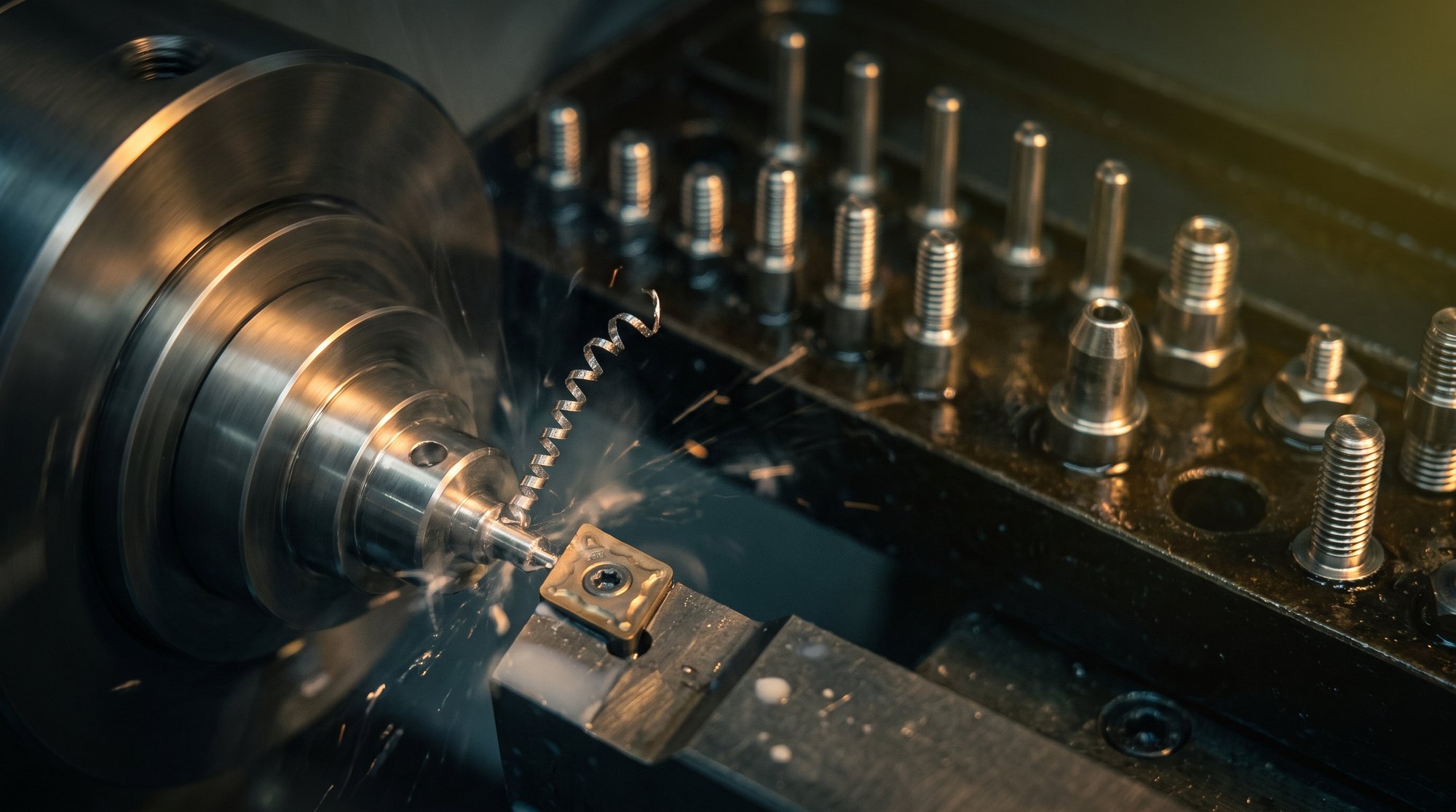
For precision small parts in the 3 to 38 mm bar range — shafts, pins, connectors, threaded fasteners — Swiss-type machining removes deflection on long slender parts because the guide bushing supports the barstock right next to the cutting tool. Modern Swiss lathes combine turning, threading, grooving, drilling, milled flats, cross-holes, and back-work off the sub-spindle in one setup. Parts finish complete off the machine rather than routing through multiple operations across multiple shops.
At EGM Manufacturing, our Tsugami B0386-III handles bar up to 38 mm with guide bushing (42 mm in chucker mode) and offers Y2 axis with live tooling on the sub-spindle. Our Tsugami B0205-V is a 20 mm capacity Swissturn built for higher-speed small parts, with a 10,000 rpm main spindle and 12,000 rpm back spindle. Both platforms feature 0.1 micron axis resolution.
How EGM Manufacturing Adds Capacity to Your Program
EGM Manufacturing runs Swiss, multi-axis milling, and CNC turning under one AS9100 and ITAR-registered roof in Sunrise, Florida. We hold AS9100 certification, ISO 9001:2015 certification, ITAR registration, and JCP (DD2345) certification — the credential stack aerospace primes require. With 50+ years of combined machining experience, we take on prototype work and short-run production alike, scaling from a single unit to 1,000+ per program.
For program managers looking to de-risk their small-parts supply chain, adding a qualified domestic supplier before capacity becomes critical remains the highest-leverage move available.
Frequently Asked Questions About the Aerospace Small-Parts Bottleneck
How big is the current aerospace order backlog?
The commercial aircraft backlog has surpassed 17,000 aircraft, per IATA reporting from December 2025 — equivalent to nearly 12 years of production at current capacity. Historically, the backlog-to-active-fleet ratio held steady at 30% to 40%, but current backlog now equals almost 60% of the active fleet, showing the depth of the current imbalance.
What is causing the aerospace small-parts bottleneck?
Multiple pressures stack on top of each other. Raw material shortages, particularly for titanium and nickel alloys, extend lead times before machining even begins. Skilled labor shortages limit how much capacity existing shops can actually run. Qualification requirements slow the addition of new suppliers, and demand from both commercial and defense programs continues to grow. Each factor compounds the others.
Are aerospace fasteners in short supply?
Yes. According to current industry reporting, aerospace fasteners illustrate systemic supply chain fragility more clearly than most part categories. Even a shortage of a single specialized titanium fastener can halt final assembly of an aircraft. Titanium fastener lead times for some specialized grades have reportedly extended significantly beyond pre-pandemic norms as raw material and qualification pressures compound.
How does the skilled labor shortage affect delivery times?
According to an Aerospace Industries Association study, 56% of companies are struggling to hire skilled manufacturing workers. When a shop cannot staff its machines, unused capacity is functionally the same as no capacity. Boeing reportedly incurred approximately $5 billion in losses tied to halted production and delivery delays, driven in part by skilled worker shortages, per Leeham News reporting from May 2026.
When is aerospace supply chain pressure expected to ease?
IATA reports that the structural mismatch between airline requirements and production capacity is unlikely to normalize before 2031 to 2034. Deloitte’s 2026 Aerospace & Defense Industry Outlook forecasts persistent shortages of materials, skilled labor, and geopolitical disruptions keeping the sector under pressure through at least 2027. Program managers should plan for a multi-year condition, not a short-term blip.
What Swiss platforms does EGM Manufacturing run?
EGM Manufacturing runs two Tsugami Swiss lathes — the B0386-III with 38 mm bar capacity (42 mm in chucker mode) and Y2 axis live tooling, and the B0205-V with 20 mm bar capacity, 10,000 rpm main spindle, and 12,000 rpm back spindle. Both platforms feature 0.1 micron axis resolution and support single-setup complete part machining.
How can I add capacity before my current supplier falls behind?
The most effective path is to qualify a secondary or complementary supplier before capacity becomes critical. Qualification takes weeks for simple parts and months for flight-critical or ITAR-controlled parts. Buyers who begin qualification 6 to 12 months ahead of a projected capacity crunch retain schedule control. Buyers who wait get whatever capacity remains when everyone else is scrambling.
Ready to De-Risk Your Small-Parts Supply Chain?
The aerospace small-parts bottleneck is a multi-year condition, not a passing shortage. EGM Manufacturing offers the certifications, the equipment, and the track record aerospace and defense buyers need to add qualified domestic capacity before program schedules slip.
Contact Us Today to Get Started