
In June 2026, the Government Accountability Office published its annual review of F-35 sustainment. The numbers are worth reading closely, because they describe a shift that reaches far past one aircraft program.
Across the fleet from fiscal year 2021 through fiscal year 2025, the mission capable rate fell from 67 percent to 44 percent. The full mission capable rate, meaning aircraft able to perform every tasked mission, dropped from 38 percent to 25 percent. One in four. In response, the Joint Program Office launched a sustainment reset requiring an estimated $13.7 billion more than previously planned through fiscal year 2031.
More than $7 billion of that goes to the private sector for parts and material. GAO flagged the obvious risk alongside it: capacity constraints persist for key parts.
That last sentence is the one machine shops should sit with, because the demand it describes does not arrive as one large purchase order.
Sustainment demand arrives in small lots
A production program buys parts the way a factory thinks. Big quantities, firm schedules, hard tooling amortized across thousands of units.
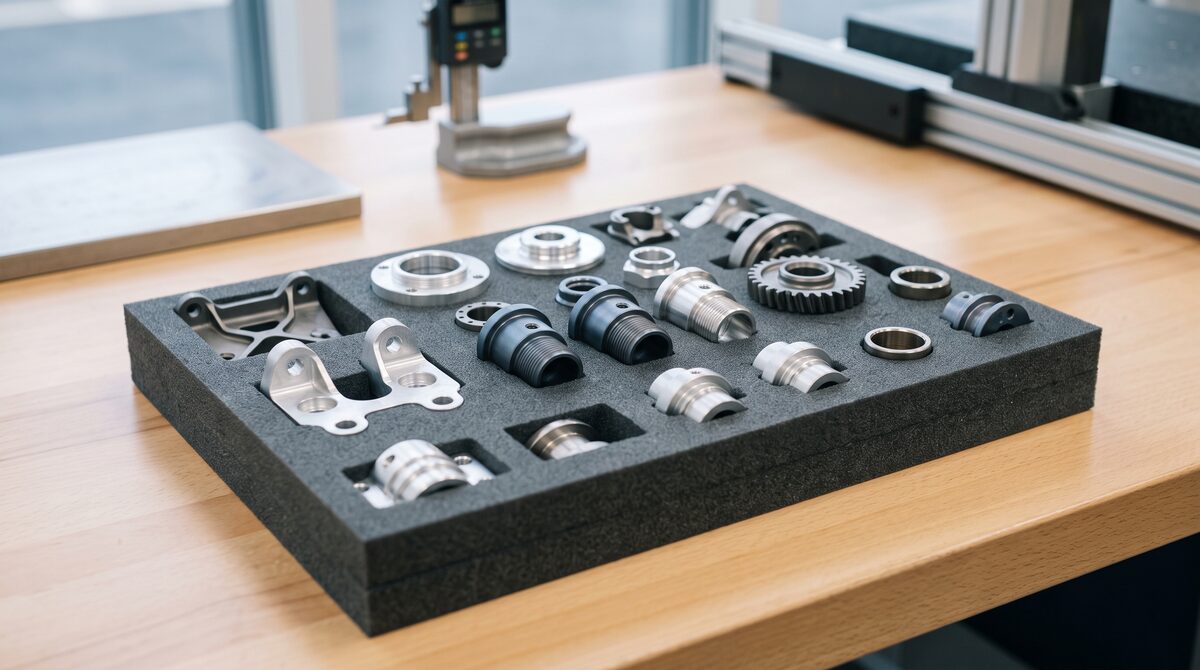
Sustainment buys parts the way a maintenance depot thinks. Twelve of this. Forty of that. A bracket that cracked on eight airframes and now needs replacing across the rest of the fleet.
The quantities stay small because the failures are specific. A depot does not need ten thousand of a part. It needs enough to clear the current backlog, plus a margin. When the same part fails again in eighteen months, it orders again.
This is not a defect in how sustainment works. It is what sustainment is. But it produces a purchasing pattern the industrial base spent forty years optimizing against.
Four forces pushing order sizes down
Fleet age. Aircraft designed decades ago are still flying, and many are scheduled to keep flying well into the future. Original suppliers have exited, been acquired, or discontinued the part. What remains is a requirement for small quantities of components nobody currently produces, the problem the Department of Defense calls diminishing manufacturing sources. We cover it in detail in our piece on obsolescence and small-batch sustainment.
Configuration churn. Modern platforms change in blocks. A modification approved this year affects a subset of the fleet, not all of it. Each modification generates its own parts list at its own quantity, and those quantities are rarely round numbers.
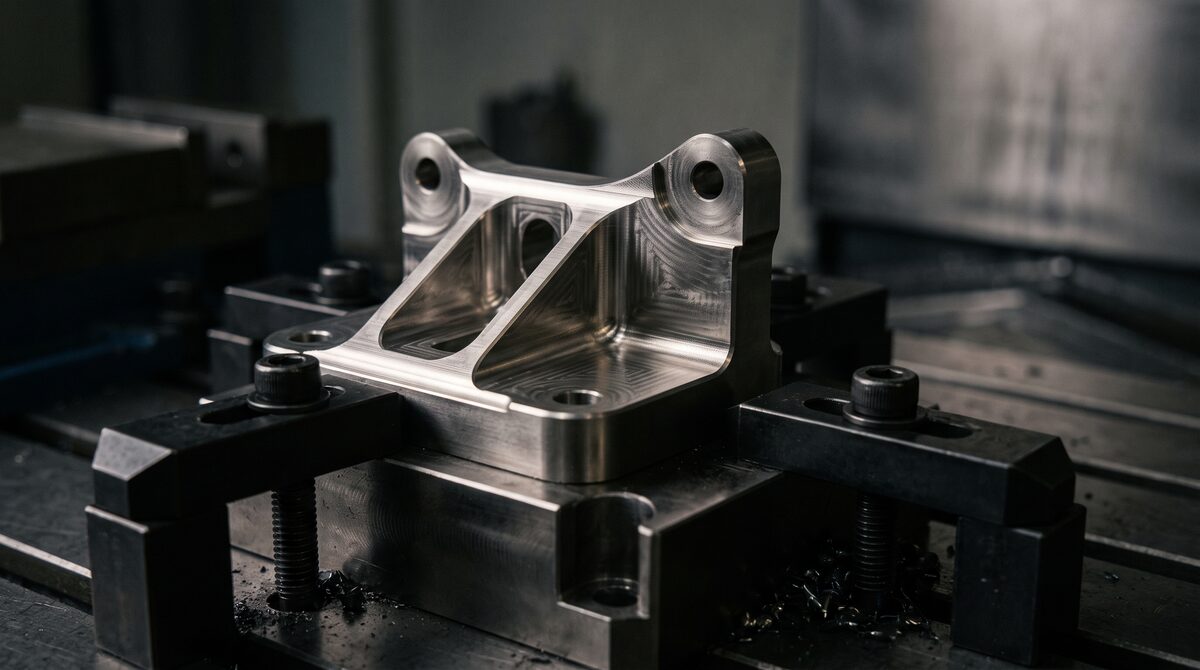
Qualification before rate. New designs need production-representative parts before anyone commits to volume. Fifty units. Two hundred. Enough to test, install, and document, made on production equipment to production standards.
Risk-managed inventory. Buyers who were caught by long lead times in 2021 and 2022 learned an expensive lesson about holding stock. Many now order smaller quantities more often rather than committing to a single large lot eighteen months out.
None of these are cyclical. All four are structural, and all four point the same direction.
Why minimums existed in the first place
The minimum order quantity was never arbitrary. It was arithmetic.
Setup cost is fixed. Programming, fixturing, first article, and inspection setup cost the same whether the run is ten pieces or ten thousand. Spread across ten thousand, that cost disappears into the unit price. Spread across ten, it dominates it.
Hard tooling made the problem worse. Dedicated fixtures and gauges are a capital expense that only pays back at volume, which is why non-recurring engineering charges became standard, and why so many shops set a floor beneath which a job simply was not worth quoting.
What changed is the setup itself.
Multi-axis machining lets a part that once needed three or four operations complete in one. Fewer setups mean less fixed cost to amortize. Offline programming and simulation move work off the machine and onto a screen before a single chip is cut. Modular workholding replaces the dedicated fixture. Storing programs, tooling, and run records turns a repeat order into a fraction of the original setup.
The economics that made minimums necessary have genuinely softened. Plenty of shops have not updated their quoting policy to match.
What this means for buyers
A buyer needing forty certified parts now faces a market split into three groups.
Production houses are built for volume. They will decline the job, or quote it at a price that assumes they would rather not have it.
Online quoting platforms will take the order quickly. What they generally will not provide is an engineer who reviews the print, flags a tolerance that cannot be held on that geometry, and calls before cutting.
Shops built for the middle treat small batches as the core business rather than an interruption. That is a deliberate structural choice, not a favor.
The questions worth asking a supplier are practical. Do you hold AS9100 certification, and does the small batch run under the same quality system as your large ones? Does every lot ship with material certifications, dimensional reports, and traceability? Do you store tooling and run records so the repeat order does not repeat the setup cost? Is ITAR registration in place if the work touches a defense program?
Those four answers separate a shop that accepts low-volume work from one designed around it. We look at the hardest version of this problem, the fifty to five hundred unit band, in our article on the qualification gap.
The capacity question underneath it all
GAO’s warning about constrained industry capacity is not really about total machining capacity in the United States. It is about the right kind of capacity.
Billions of dollars of sustainment funding will not move faster than the supplier base can absorb small, certified, documented orders. A shop with open spindles and a five hundred piece minimum cannot help. Neither can a shop with no aerospace paper trail.
The constraint is structural, and it explains why short run production machining has moved from a niche accommodation to a category buyers now search for by name.
Frequently Asked Questions About Short Run Production Machining
01What is considered a short run in CNC machining?
Short run production machining generally covers batches between prototype quantities and full production. At EGM, that means 10 to 1,000 units. The exact threshold depends on part size, complexity, and schedule, so the same quantity can be routine for one part and demanding for another.
02Why do machine shops have minimum order quantities?
Setup cost does not change with quantity. Programming, fixturing, first article inspection, and gauging cost the same for ten parts or ten thousand. Minimums exist so that fixed cost stays a small share of the unit price. Multi-axis machining and stored tooling have reduced that fixed cost considerably.
03Is short run machining more expensive per part?
Per-unit cost is usually higher on a small batch because setup is spread across fewer parts. The total project cost is often lower, since low volume work avoids hard tooling and non-recurring engineering charges. Which number matters depends on whether you are budgeting per part or per program.
04Can low volume parts still meet AS9100 requirements?
Yes. AS9100 applies to the quality system, not the batch size. A compliant shop runs ten parts under the same documented process as ten thousand, with material certifications, dimensional reports, and traceability on every lot. Ask whether small batches follow the same system before you order.
05How do repeat orders work for small batches?
A shop that stores programs, fixtures, and run records can skip most of the original setup on a repeat batch. That makes the second order cheaper to produce than the first. Ask a supplier directly whether they retain tooling and part history between runs, because practice varies widely.
EGM Manufacturing: Small Batches, Full Documentation
EGM Manufacturing has machined precision parts in Sunrise, Florida since 2005. The shop is ISO 9001:2015 certified, AS9100 certified, and ITAR registered, with no volume minimums. Ten parts or a thousand, run under the same quality system.
Our Services Include:
- Short Run Production: 10 to 1,000 units with repeat order tooling, in-house finishing, and full traceability on every batch
- CNC Prototyping: First-article inspection, DFM feedback, and reverse engineering from a drawing or an existing part
Have a quantity other shops won’t quote? Send EGM the print with your material, tolerance, and volume.
Works Cited
- “F-35 Sustainment: Actions Needed to Ensure Updated Strategy Improves Persistent Readiness Challenges.” U.S. Government Accountability Office, GAO-26-108113, 11 June 2026, www.gao.gov/products/gao-26-108113. Accessed 25 Aug. 2026.