
NASA rates technology maturity on a nine-level readiness scale. TRL 1 is the lowest, where scientific research is only beginning. TRL 9 is the highest, reserved for hardware that has flown a successful mission.
The interesting part for a machine shop sits in the middle of that scale. At TRL 6, a technology has a fully functional prototype or representational model. At TRL 7, that prototype has to be demonstrated in a space environment. At TRL 8, the technology has been tested and flight qualified, ready to go into a system that already exists.
Somewhere across those levels, a design stops being a drawing and becomes hardware that has to survive a real environment, carry real documentation, and be made the way the production article will be made.
That transition has a quantity attached to it. Rarely one part. Rarely ten thousand. Usually somewhere between fifty and five hundred.
It is the hardest quantity in the industry to buy.
The band nobody is built for
The market for machined parts sorts itself into two shapes, and the qualification band falls between them.
Prototype work is set up for one to ten pieces. Fast, flexible, tolerant of an incomplete drawing package, and frequently run on whatever machine is free.
Rate production is set up for thousands. Hard tooling, dedicated fixtures, a validated process, and a unit price that only works because the setup is spread thin.
A qualification build is neither. It needs the documentation discipline of production and the flexibility of prototyping, at a quantity that pays for neither. We looked at the wider collapse of order sizes in our pillar article on disappearing minimum order quantities, and the qualification band is where that collapse bites hardest.
Why qualification parts cannot be made the prototype way
The point of a qualification build is to prove that the design works when it is made the way it will actually be made.
A prototype machined on a one-off setup, with a skilled machinist compensating by hand, proves that the geometry is achievable. It does not prove that the process is repeatable. Those are different claims, and only the second one qualifies a design.
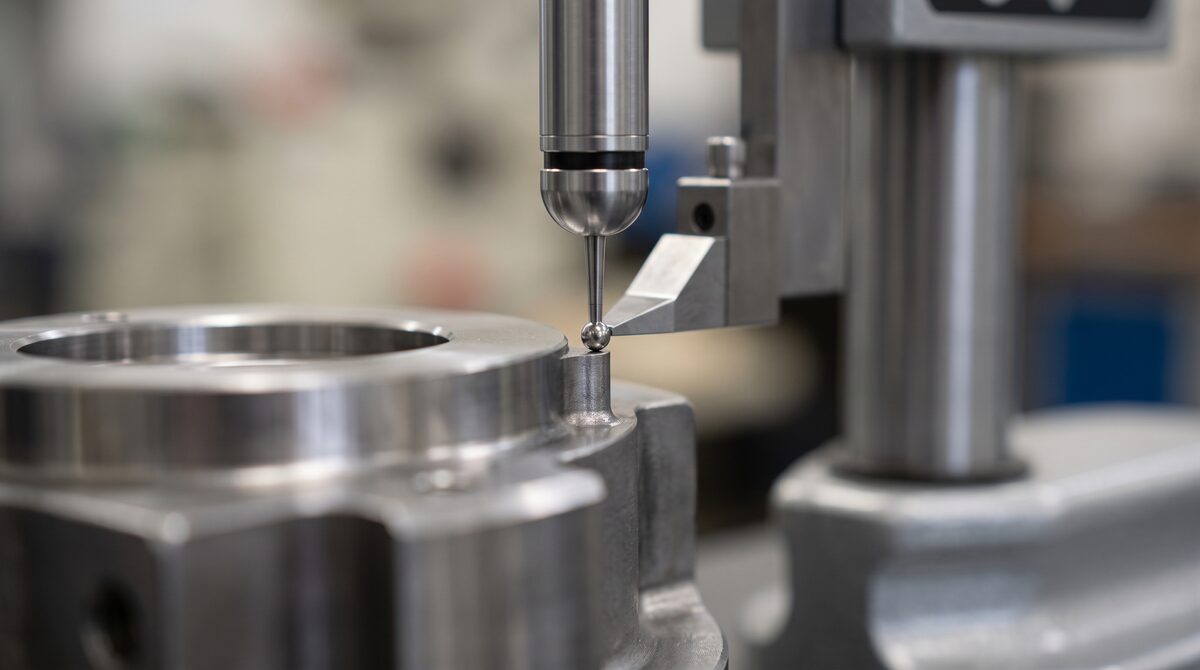
So the qualification build has to run on production equipment, with production fixturing, production programs, and production inspection. The machinist is not allowed to be the variable that makes it work.
This is why qualification build machining is a distinct capability rather than a large prototype order. The shop has to behave like a production supplier at a quantity that looks like a prototype run.
The documentation is the deliverable
On a qualification build, the parts are half the delivery. The other half is paper.
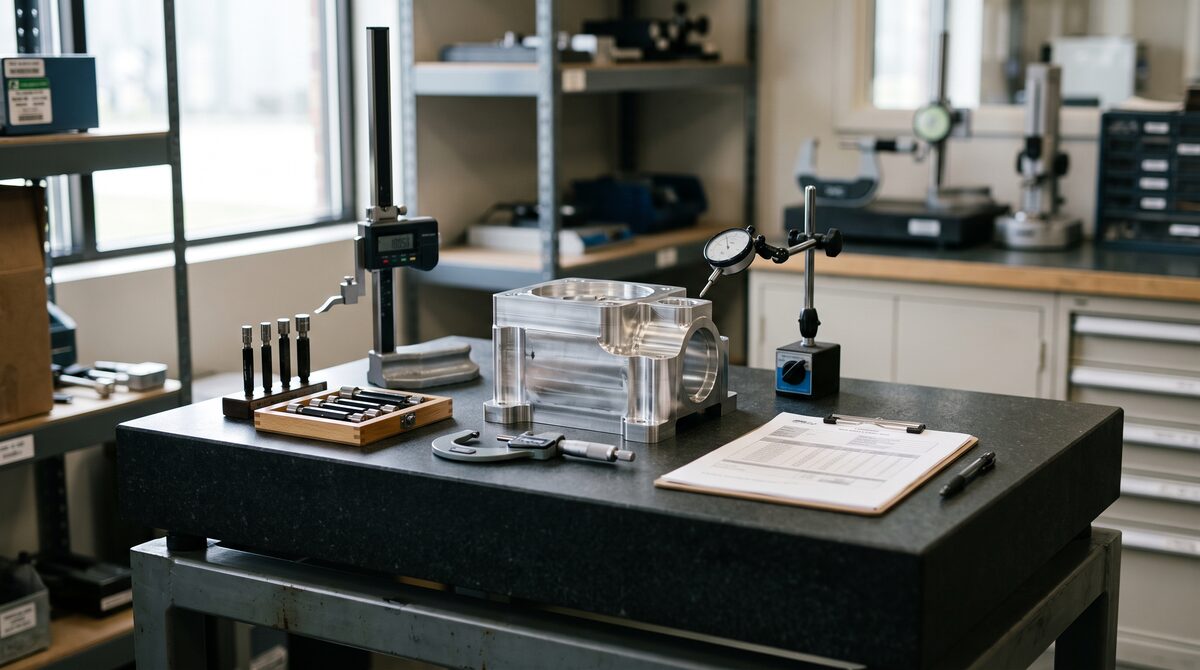
First article inspection is the mechanism. Every dimension on the drawing gets measured, recorded, and tied back to the characteristic it came from, so the customer can see that the process produced a conforming part rather than that an inspector found one. Material certifications trace the stock. Process records trace the operations.
AS9102 is the aerospace standard that governs how that first article package is structured. It is worth confirming which revision a customer expects, because the requirement travels through the purchase order rather than through the quality certification.
A shop that treats inspection as a final gate rather than a documented output will pass the parts and fail the build. The certification that matters here is systemic, which is why AS9100 and the certification trio function as an entry requirement rather than a selling point.
The economics that break at two hundred units
Non-recurring engineering is what kills this quantity.
Programming, fixture design, first article documentation, and process validation are all fixed costs. At ten thousand units they vanish into the unit price. At two hundred they are the unit price, and the buyer is looking at a quote that appears absurd next to the rate-production estimate in the business case.
The response is usually to push the NRE into the qualification phase as a separate line, which makes the program office the one absorbing it. That works until someone compares the qualification unit cost against the projected rate cost and asks why they differ by a factor of five.
They differ because they are measuring different things. One includes the cost of proving the process. The other assumes the process is already proven. Programs that budget for qualification as though it were early production tend to run out of money at exactly the wrong moment.
Configuration control between qualification and rate
The quiet failure mode is drift.
A qualification build gets approved. Eighteen months later, rate production begins, sometimes at a different supplier, sometimes on different equipment. The drawing is the same. The process is not.
Every difference between the qualified process and the production process is a question the program has to answer. A different fixture changes how the part is held. A different machine changes the toolpath. A different finishing vendor changes the surface. None of those show up on the drawing, and all of them can show up in the test data.
Keeping the qualification supplier and the rate supplier the same removes most of that risk, which is why buyers increasingly ask a qualification shop whether it can scale before awarding the qualification work at all.
When the qualification supplier cannot scale
The mirror problem is a shop that wins the qualification build and cannot take the follow-on.
Re-sourcing after qualification means re-proving the process, running a new first article, and accepting schedule risk at the point where the program is least able to absorb it. The savings from a cheaper rate supplier get consumed by the requalification.
Buyers evaluating a qualification partner tend to work through the same short list of questions. Does the shop hold AS9100, and does the small build run under the same quality system as everything else? Does it store programs, fixtures, and run records so the follow-on order starts from the qualified process rather than from scratch? Is ITAR registration in place if the program is defense-related? Can it carry the part from qualification into repeat production without a supplier change?
Obsolescence creates the same supplier problem from the opposite direction, which we cover in our article on small-batch sustainment.
The band is getting busier
More programs are arriving at this quantity, not fewer.
Development cycles are shorter, block modifications are more frequent, and buyers are less willing to commit to rate production before the hardware has proven itself in a real environment. Each of those pushes more volume into the qualification band and out of the two shapes the market is actually organized around.
The pressure is not evenly spread either. A program that qualifies a part on production equipment and then cannot find capacity for the follow-on batch has converted a technical milestone into a sourcing problem. Qualification is the point where a program learns whether its supply chain can actually support the design it just approved, which is a harder question than whether the part passes test.
The shops positioned for it are the ones that treat fifty to five hundred pieces as normal work rather than an accommodation, and that can hand over the documentation package without being asked twice.
Frequently Asked Questions About Qualification Build Machining
01What is a qualification build?
A qualification build is a batch of parts made to prove a design and its manufacturing process before rate production is approved. The parts must be produced on production equipment using production methods, with full inspection documentation, so the results represent what the eventual production article will be.
02Why can a qualification part not be made like a prototype?
Because a prototype proves the geometry can be achieved, not that the process repeats. Qualification requires production fixturing, production programs, and production inspection, so the result reflects how the part will actually be made rather than how a skilled machinist made one work once.
03What is first article inspection and how does AS9102 relate to it?
First article inspection verifies and records every drawing characteristic on a part from the first production run. AS9102 is the aerospace standard that structures that package. Confirm the expected revision with your customer, because the requirement usually arrives through the purchase order rather than the quality certification.
04Why is non-recurring engineering such a problem at low volume?
Non-recurring engineering covers programming, fixturing, validation, and documentation. Those costs are fixed, so at a few hundred units they dominate the unit price rather than disappearing into it. The qualification unit cost and the projected rate cost measure different things and should not be compared directly.
05Should the qualification supplier also handle rate production?
Re-sourcing after qualification means re-proving the process and running a new first article, which adds cost and schedule risk. Many buyers now confirm that a qualification supplier can carry the part into repeat production before awarding the qualification work in the first place.
EGM Manufacturing: Built for the Quantity Between
EGM Manufacturing has machined precision parts in Sunrise, Florida since 2005. The shop is ISO 9001:2015 certified, AS9100 certified, and ITAR registered, with no volume minimums. Ten parts or a thousand, run under the same quality system, with first article inspection, material certifications, and full traceability on every batch.
Our Services Include:
- Certifications: ISO 9001:2015, AS9100, and ITAR registration, the credentials aerospace and defense buyers gate on
- Short Run Production: 10 to 1,000 units with repeat order tooling stored between runs and in-house finishing
Have a qualification build that falls between prototype and rate? Send EGM the print with your material, tolerance, and quantity.
Works Cited
- “Technology Readiness Levels.” National Aeronautics and Space Administration, 25 June 2026, www.nasa.gov/directorates/somd/space-communications-navigation-program/technology-readiness-levels/. Accessed 25 Aug. 2026.