
A prototype proves the design. Production proves the process. The gap between those two milestones is where many programs lose weeks, because the part that passed testing was made in a way that cannot repeat at volume. Prototype to production CNC machining goes smoothest when the prototype is built with production in mind from the first setup.
Order Backlogs Are Pushing Programs Toward Volume
Manufacturers are carrying heavy backlogs into the fall of 2026. The Census Bureau’s July 2026 full report on manufacturers’ shipments, inventories, and orders, released September 2, 2026, put unfilled orders for durable goods at $1,600.3 billion, up in 24 of the last 25 months. Unfilled orders for fabricated metal products reached about $165.1 billion, 6.9 percent above July 2025.
Backlogs like that turn prototype programs into production programs quickly. A part that was a one-off in the spring can become a monthly order by the fall.
Where Re-Tooling Comes From
Re-tooling means redoing work that was already done: new programs, new fixtures, new inspection plans, and sometimes new first articles. It usually traces back to shortcuts that made sense for a single prototype.
Temporary workholding. Soft jaws cut for one part, or a part clamped by hand in a vise, work fine for quantity one. They rarely hold the same position across fifty parts.
Hand operations. A burr removed by hand or a feature finished on a manual machine adds labor and variation at volume.
Material substitutions. A prototype cut from whatever bar was on the shelf may behave differently from the specified alloy in production.
Drawing changes after the fact. If the tested part does not match the released print, the first production run becomes a second prototype.
Keeping the Prototype Process Versus Rebuilding It
Programs usually face a choice between two approaches when volume arrives.
Keep the prototype process. If the prototype was machined on production-class equipment, from the specified material, with a documented setup, the shop can often run the next batch from the same program and fixture. First article records carry forward, and the change is mostly scheduling.
Rebuild the process. If the prototype relied on one-off setups, the shop re-plans the part for volume. That can mean dedicated fixtures, a different machine, or combining operations. It costs time up front but can lower the unit cost at higher quantities.
Neither path is wrong. The choice depends on expected volume, tolerance demands, and how long the part will stay in production. What costs the most is choosing by accident.
Five Ways to Scale Without Starting Over
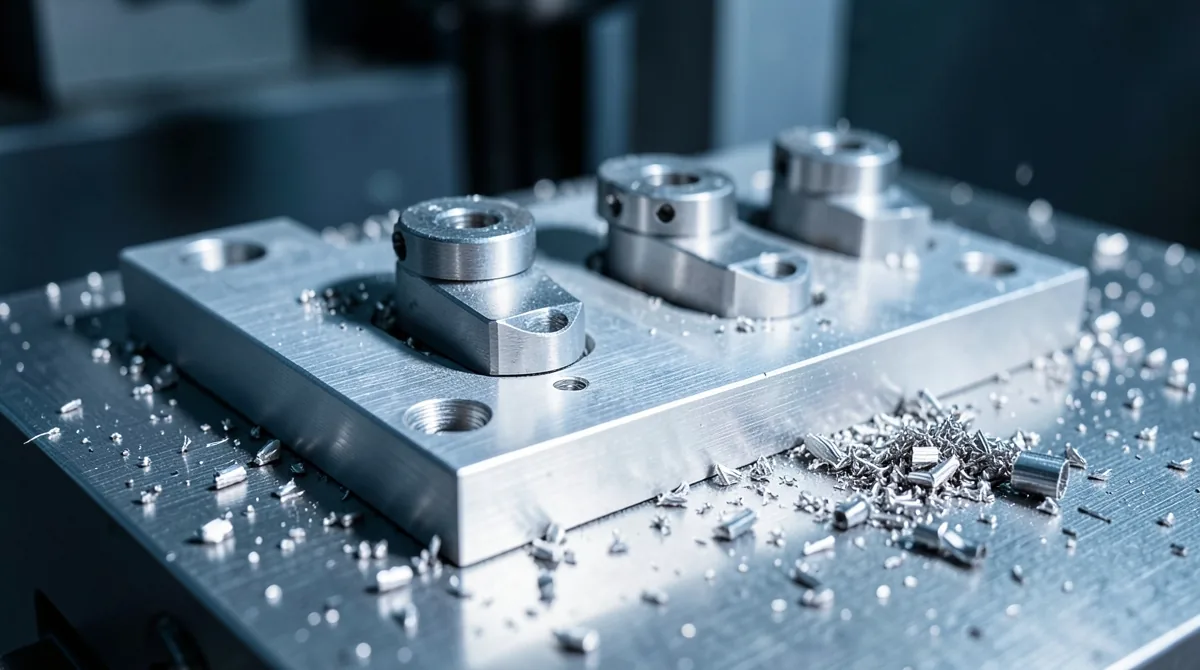
Machine the prototype the production way. Use the specified material and production-class equipment whenever the budget allows.
Lock the datum scheme early. Datums that match how the part will be fixtured and inspected carry straight into production.
Keep programs, fixtures, and inspection plans on file. Repeat order tooling turns a second batch into a rerun rather than a restart.
Run a bridge batch. A short run of 25 or 50 pieces tests the process at a modest scale before a larger commitment. Buyers who start with no minimum order CNC machining can step up in the same shop.
Freeze the revision before first article. Changes after first article inspection usually mean inspecting again.
First Article Inspection at the Handoff
First article inspection verifies that the production process makes parts that match the print. In aerospace, SAE International’s AS9102C, revised in June 2023, sets requirements for performing and documenting it, and it states those requirements complement customer and regulatory requirements rather than replace them.
Many aerospace buyers require a new or partial first article when the design, the manufacturing process, or the production location changes. A prototype-to-production plan that keeps those three stable keeps the paperwork manageable.
Questions to Ask Before Prototype to Production CNC Machining
A short conversation with the shop before the first batch saves most of the surprises.
- Will the next batch run on the same machine class and program as the prototype?
- Which programs and fixtures stay on file between orders?
- What inspection plan applies to production batches, and how is it documented?
- Which finishing steps happen in-house, and which go to outside vendors?
- At what quantity does a dedicated fixture start to lower the unit cost?
Do Not Forget the Finish
Finishing is part of the production process too. A prototype left as machined for a fit check tells engineers nothing about how an anodized or plated part will measure. Deciding among finishing options for CNC machined parts before first article avoids a surprise at the coating stage.
At EGM Manufacturing, short run production covers 10 to 1,000 units with repeat order tooling and in-house finishing, and prototypes go through first article inspection. That lets a part move from its first sample to its first batch inside one shop and one quality system.
Frequently Asked Questions About Prototype to Production CNC Machining
01What is the difference between a prototype and a production CNC part?
A prototype proves the design, while a production part proves the process can repeat. Prototypes may use temporary workholding, hand operations, or substitute materials. Production parts need documented setups, specified materials, stable fixtures, and an inspection plan that holds the print across every batch, not only the first piece.
02When should a prototype move to production machining?
A prototype is ready for production when the design revision is frozen, testing has passed, and the expected volume justifies a documented process. Moving too early risks re-inspecting after late changes. Many programs run a bridge batch of 25 to 50 pieces first to confirm the process at modest scale.
03Do I need a new first article inspection when I move to production?
Often, yes. Many aerospace buyers require a new or partial first article inspection when the design, manufacturing process, or production location changes. If production runs in the same shop, on the same process, from the same revision as the approved first article, the existing record may carry forward.
04What is bridge production in CNC machining?
Bridge production is a short run that fills the gap between prototypes and full production. It supplies parts for pilot builds, qualification, or early customers while the program decides on long-term tooling. EGM Manufacturing in Sunrise, Florida, runs short-run production from 10 to 1,000 units with repeat order tooling.
05How can I avoid re-tooling when I scale up?
Build the prototype the production way: specified material, production-class equipment, documented setups, and a datum scheme that matches inspection. Keep programs and fixtures on file, freeze the revision before first article, and decide the finish early. Those steps let later batches rerun proven setups rather than start over.
EGM Manufacturing: Precision CNC Machining in Sunrise, Florida
EGM Manufacturing has machined precision parts in Sunrise, Florida since 2005. The shop is ISO 9001:2015 certified, AS9100 certified, and ITAR registered, with no volume minimums — one prototype or a thousand pieces.
Our Services Include:
- Short Run Production — 10 to 1,000 units with repeat order tooling and in-house finishing
- CNC Prototyping — First-article inspection, DFM feedback, and reverse engineering from a drawing or a sample
Have a part other shops won’t quote? Send EGM the print with your material, tolerance, and quantity.
Works Cited
- SAE International. “AS9102C: Aerospace Series – First Article Inspection Requirements.” SAE Mobilus, 28 June 2023, saemobilus.sae.org/standards/as9102c-aerospace-series-first-article-inspection-requirements.
- U.S. Census Bureau. “Monthly Full Report on Manufacturers’ Shipments, Inventories and Orders, July 2026.” U.S. Department of Commerce, 2 Sept. 2026, www.census.gov/manufacturing/m3/prel/pdf/s-i-o.pdf.